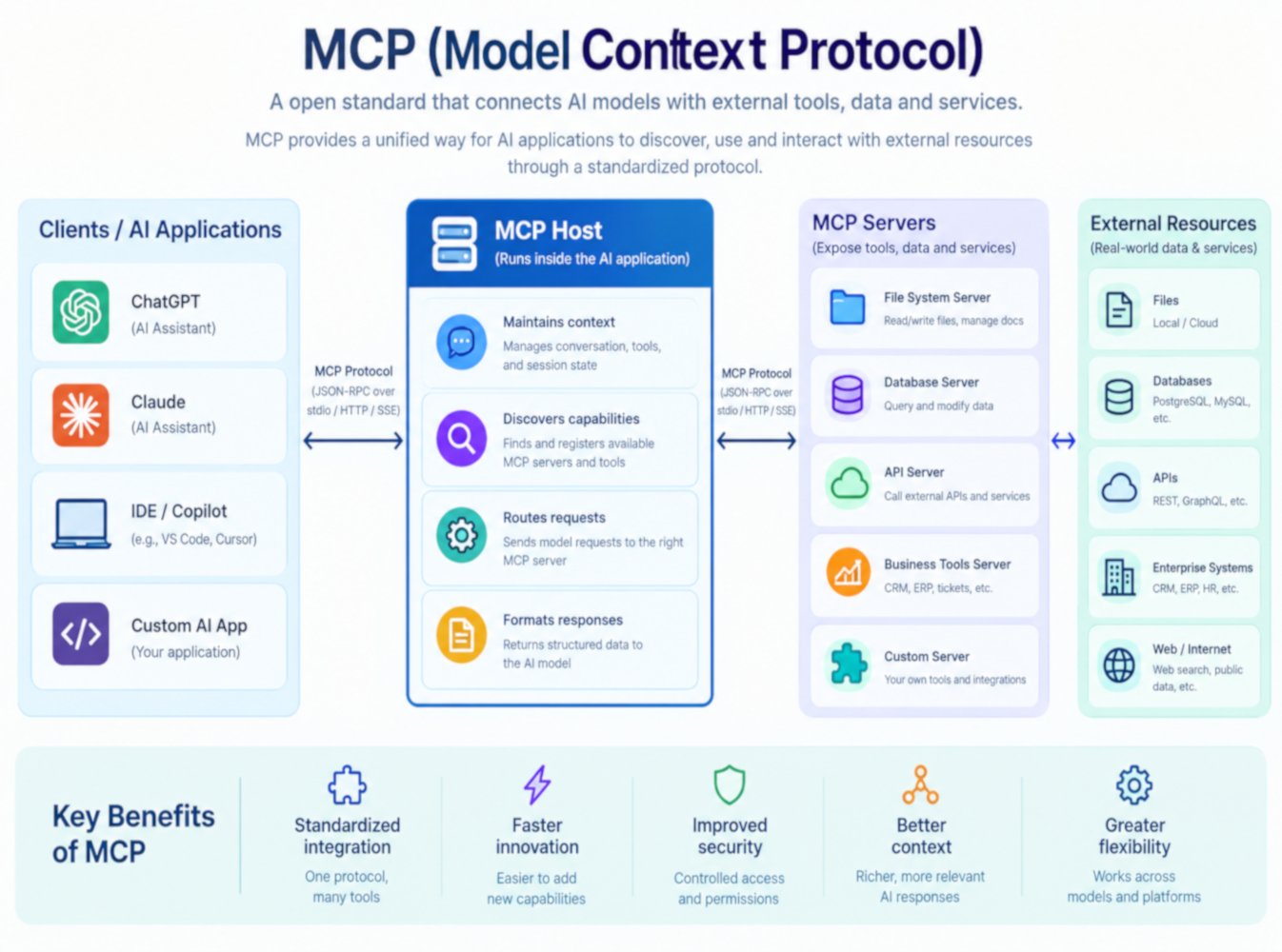
An MCP server turns operations into tools that AI clients can call. Publish your APIs and workflows as MCP tools, combine them with approved external servers, and apply the same policies as any other route.
[ Capabilities ]
Publish operations and workflows as tools. Drafts stay private until you publish them.
Serve your own tools together with approved tools from external MCP servers, registered as upstreams.
Each upstream gets a prefix on its tool names, so tools from different sources never collide.
Tools that write or delete data are flagged, so you can review them before agents can call them.
Authentication, quotas and threat protection apply to MCP traffic exactly as they do to any API.
Serve an MCP server from a path on a Moose API, so clients connect to a URL like any other endpoint.
[ How it works ]
Choose the operations and workflows to expose as tools.
Check which tools write or delete data.
Register approved external MCP servers as upstreams.
Attach authentication and quotas to the MCP route.
Give the AI client the route address.
[ Explore ]